South Carolina became the eighth state to ratify the U.S. Constitution on May 23, 1788. Here is its history in one place: 59 historic sites you can visit (12 free), 76 National Historic Landmarks, 41 historic tours and trails, 34 history events and a 60-event timeline, each checked against an official page.
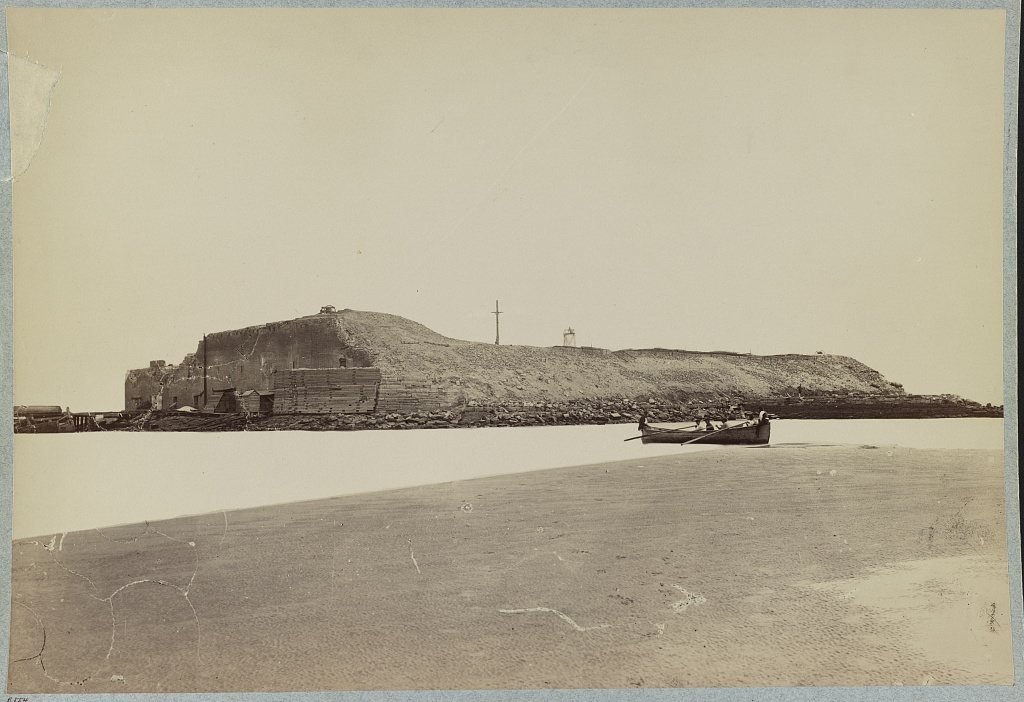
Header photo: Fort Sumter in Charleston Harbor in April 1865, four years after the first shots of the Civil War. Credit: Library of Congress, Prints & Photographs Division, LC-DIG-ppmsca-35218.
- 17888th state (May 23, 1788)
- 59historic sites to visit
- 76National Historic Landmarks
- 41tours and trails
- South Carolina history by era
- Historic sites by region
- Tours and trails
- History events
- Markers, archives, America 250
South Carolina is where the Civil War began, at Fort Sumter in 1861, where SC250 says more Revolutionary War battles and skirmishes took place than in any other colony, and where the Gullah Geechee culture of the Sea Islands and the first steps of Reconstruction took root.
South Carolina history by era
The short version, era by era. Every date is on the full 60-event timeline with its source.
- about 13,000 years ago: Human groups were living in what became South Carolina by about 13,000 years ago, the time frame widely accepted by archaeologists (scant evidence suggests possibly 18,000 years ago).
- five thousand to three thousand years ago: Late Archaic peoples built fifteen shell ring complexes along the outer coastal plain and made early clay pottery.
- September 1526: Lucas Vázquez de Ayllón founded San Miguel de Gualdape, the first Spanish town in the present-day United States; scholars place it at various sites on the South Carolina and Georgia coast.
- April 1566: Pedro Menéndez de Avilés founded Santa Elena on present-day Parris Island; it served as capital of Spanish La Florida for much of its first ten years and lasted until 1587.
- April 1670: Settlers from England and the Caribbean founded Charles Towne at Albemarle Point on the west bank of the Ashley River, the first permanent European settlement in Carolina.
- September 9, 1739: The Stono Rebellion, South Carolina’s largest and bloodiest slave insurrection, began on a branch of the Stono River as enslaved people tried to reach freedom in Spanish Florida.
- June 28, 1776: Patriots in an unfinished palmetto-log fort on Sullivan’s Island (later Fort Moultrie) defeated a British attack, the first major patriot victory of the war.
- October 7, 1780: Patriot militia defeated British Major Patrick Ferguson’s Loyalist force at Kings Mountain, the first major patriot victory after the British took Charleston.
- January 17, 1781: Daniel Morgan’s army turned both flanks of Banastre Tarleton’s British army at Cowpens in a classic double envelopment.
- May 1788: South Carolina ratified the U.S. Constitution; the final vote in the Charleston convention was 149 to 73.
- 1832-1833: Nullifiers called a state convention that nullified the federal tariffs, a crisis eased by the compromise tariff of 1833.
- December 20, 1860: The 169 delegates of the South Carolina convention in Charleston voted unanimously to secede from the Union.
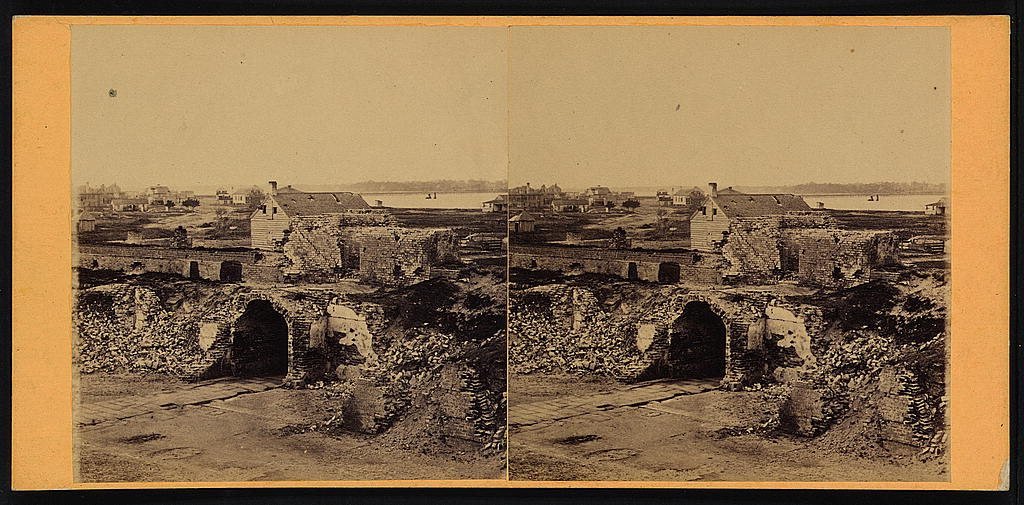
- April 12, 1861: Confederate forces fired on the U.S. garrison at Fort Sumter, opening the Civil War.
- May 13, 1862: Robert Smalls led the enslaved crew of the steamer Planter past Charleston harbor’s defenses and surrendered the vessel to the U.S. blockading fleet.
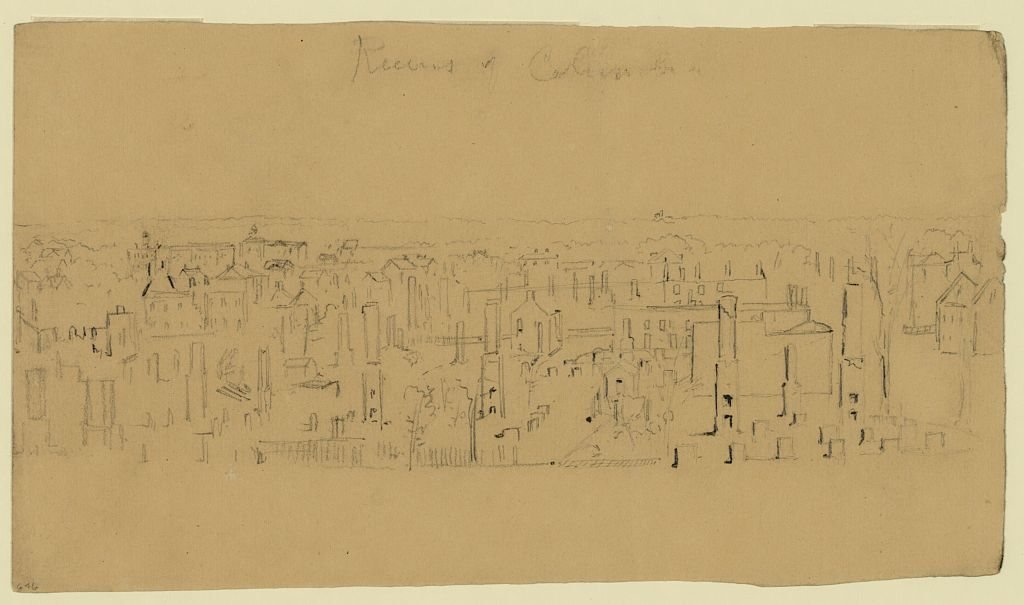
- 1868: Of 124 delegates to South Carolina’s 1868 constitutional convention, 73 were Black or of mixed ancestry.
- December 1870: Joseph Hayne Rainey of Georgetown took his seat in Congress, the first Black man to serve in the U.S. House of Representatives.
- August 31, 1886: The giant Charleston earthquake struck; three later shocks of magnitude 5.0-5.9 recorded in the state were its aftershocks.
- September 1934: During the General Textile Strike, six strikers were killed at the Chiquola mill in Honea Path.
- 1952-1954: Briggs v. Elliott, filed by twenty Black parents in Clarendon County, became one of the five cases decided in Brown v. Board of Education.
- February 8, 1968: Three students, Samuel Hammond, Delano Middleton and Henry Smith, were killed by gunfire at South Carolina State during protests over a segregated bowling alley (the Orangeburg Massacre).
- June 17, 2015: A gunman killed nine African American members of a Bible study group at Mother Emanuel AME Church in a racist attack.
- January 12, 2017: A presidential proclamation created Reconstruction Era National Monument in Beaufort County; it became a National Historical Park on March 12, 2019.
Historic sites to visit, by region
The highlights in each region. Hours, admission and every site are on historic sites in South Carolina.
Historic tours and trails
41 ways to see South Carolina history on foot, by car or with a ranger. All of them: historic tours in South Carolina.
| Tour or trail | Where | Price | When |
|---|---|---|---|
| Fort Sumter ferry tour | Charleston Harbor (departs Liberty Square, Charleston, and Patriots Point, Mount Pleasant) | See official site | Liberty Square 9:30, 12:00, 2:45 (Feb 27-Nov 30 and Dec 26-31); 11:00 and 2:00 (Jan 2-Feb 26, Dec 1-24). Patriots Point 10:45 and 1:30 (peak); 12:30 (winter). No tours Thanksgiving, Dec 25, Jan 1 |
| Cowpens Loop Road Audio Tour | Chesnee | Free | Grounds 9-5; loop road closes 4:30 |
| The Liberty Trail (South Carolina) | Statewide | Free (apps free) | Year-round |
| U.S. Civil Rights Trail – South Carolina | Charleston, Columbia, Greenville, Greenwood, Orangeburg, Rock Hill, St. Helena Island, Summerton | Free (sites vary) | Year-round |
| Historic Charleston Foundation house museum tours | Charleston | $16 adults per house; $24 adult combo; $7 youth / $12 youth combo | Mon 1-4; Tue-Sun 10-4 (last tour 4) |
| Historic Columbia neighborhood walking tours | Columbia | $10 non-members; $5 members | Select Sundays 1-2:30 (University Hill Nov 15, 2026; Hollywood-Rose Hill Dec 13, 2026; Arsenal Hill Jan 17, 2027) |
| Penn Center docent-led tours | St. Helena Island | $15 (docent-led tour and documentary); self-guided $10 | Daily 10, 12 and 3 |
| Gullah Tours | Charleston | $35 per seat | Mon-Fri 11:00 and 1:00; Saturdays 11:00 and 1:00 (reservations required) |
History events coming up
Reenactments, living history and candlelight tours with dates the organizers have posted. All 34: history events in South Carolina.
| Event | Where | When |
|---|---|---|
| Our Founding Tables Upstate | Pickens | Nov 5, 2026 |
| Family Revolutionary Sunday: Indigenous Allies | Charleston | Nov 8, 2026 |
| Veterans Day Orangeburg District American Revolution Tour | Orangeburg | Nov 11, 2026 |
| Veterans Day Oyster Roast / Lowcountry Boil at Eutaw Springs | Eutawville | Nov 11, 2026 |
| The Battle of Camden (theatre) | Camden | Nov 12, 2026 to Nov 21, 2026 |
| 42nd Annual Penn Center Heritage Days Celebration | St. Helena Island | Nov 12, 2026 to Nov 14, 2026 |
| Carolinas Revolutionary War Weekend and Reenactments | Kershaw | Nov 14, 2026 to Nov 15, 2026 |
| 8th Annual American Revolution Symposium | Columbia | Nov 14, 2026 |
Historical markers, archives and America 250
| Program | Run by | What it is | Link |
|---|---|---|---|
| South Carolina Historical Marker Program | SC Department of Archives and History (State Historic Preservation Office) | Official state roadside marker program, established in 1936 and one of the oldest of its kind; state-managed but locally proposed, funded and maintained; new markers currently take up to 18 months (more than 2,000 markers approved since 1936) | Official page |
| Interactive Map of All Approved South Carolina Historical Markers | SC Department of Archives and History | Searchable map of every approved state marker with subject filters (African Americans, Native Americans, Women, American Revolution, Civil War); recently approved markers may not yet be erected | Official page |
| SC Historic Properties Record (SCHPR) | SC Department of Archives and History | Searchable database of National Register and statewide survey records | Official page |
| South Carolina Department of Archives and History | State of South Carolina | State archives and State Historic Preservation Office; research room, online records index and digital collections | Official page |
| South Carolina Historical Society | South Carolina Historical Society (private nonprofit) | Historical society with archives and a museum in the Fireproof Building NHL, 100 Meeting St., Charleston | Official page |
| South Carolina Encyclopedia | University of South Carolina with South Carolina Humanities, USC Press, USC Libraries, SC State Library and partners | Free digital reference built on the 2006 print volume edited by Walter B. Edgar (more than 600 authors; more than 1,200 added photos, videos and documents) | Official page |
| South Carolina 250 Commission (SC250) | State of South Carolina (chartered by the General Assembly in 2018) | Plans the state’s observance of the Sestercentennial of the American Revolution with the SC Battleground Preservation Trust; statewide event calendar, county committees, grants, historic sites guide | Official page |
| SC250 event calendar | SC250 Commission | Statewide calendar of Revolution-themed events; open to event submissions (66 events listed from Oct 21, 2026 to Oct 31, 2027 (calendar feed, 2026-10-20)) | Official page |
| Gullah Geechee Cultural Heritage Corridor | Gullah Geechee Cultural Heritage Corridor Commission (federal) | National Heritage Area designated by Congress on October 12, 2006, from Pender County, NC to St. Johns County, FL | Official page |
| South Carolina National Heritage Corridor | South Carolina National Heritage Corridor | National Heritage Area designated in 1996 (17 counties) | Official page |
National Historic Landmarks
South Carolina has 76 National Historic Landmarks on the National Park Service list. See every South Carolina National Historic Landmark by region, with which ones you can visit.
What we could not verify
- Battle counts differ: the state tourism site says more than 200 Revolutionary War battles and skirmishes were fought in South Carolina; SC250 says more than in any other colony but gives no number.
We re-check these when the source pages change. Spot something we missed? Use the corrections page.
Frequently asked questions
When did South Carolina become a state?
South Carolina became a state on May 23, 1788, when it became the eighth state to ratify the U.S. Constitution. Our timeline traces 60 dated events, from people living here about 13,000 years ago to the creation of Reconstruction Era National Monument in 2017 (source: U.S. Senate: South Carolina timeline).
Where did the Civil War start?
The Civil War started in Charleston Harbor, South Carolina, when Confederate forces fired on the U.S. garrison at Fort Sumter on April 12, 1861. Today the fort is part of Fort Sumter and Fort Moultrie National Historical Park and can be reached only by the park-authorized ferry (source: National Park Service: South Carolina).
What is the oldest town in South Carolina?
Charleston is the oldest. Settlers founded Charles Towne at Albemarle Point on the Ashley River in April 1670, the first permanent European settlement in Carolina, and moved it to the tip of the peninsula by 1680. Beaufort (chartered 1711) is second-oldest and Georgetown (1729) third (source: South Carolina Encyclopedia: Charleston).
Which historic sites in South Carolina are free?
12 of the 59 places on our sites list are free, including Cowpens National Battlefield, Kings Mountain National Military Park, Ninety Six National Historic Site, Charles Pinckney National Historic Site, the Reconstruction Era park sites and Oconee Station. 8 more have free grounds but paid house tours or extras (source: National Park Service: South Carolina).
How many historical markers does South Carolina have?
More than 2,000 state historical markers have been approved since the program began in 1936. The South Carolina Department of Archives and History runs it; markers are proposed, paid for and maintained locally, and an interactive map shows every approved marker (source: SC Department of Archives and History: Historical Markers).
Why does South Carolina matter in the American Revolution?
The state 250th commission, SC250, says more battles, skirmishes and events of the Revolution happened in South Carolina than in any other colony. Key fights include Sullivan’s Island (June 28, 1776), Camden, Kings Mountain (October 7, 1780) and Cowpens (January 17, 1781) (source: South Carolina 250 Commission).
Last checked October 20, 2026 by the It’s South Carolina editors against each operator’s, agency’s or organizer’s own page.
Sources
- U.S. Senate: South Carolina timeline
- National Park Service: places in South Carolina
- National Park Service: National Historic Landmarks program
- South Carolina Encyclopedia: Prehistoric South Carolina
- South Carolina Encyclopedia: San Miguel de Gualdape
- South Carolina Encyclopedia: De Soto’s exploration of South Carolina
- South Carolina Encyclopedia: Charlesfort
- South Carolina Encyclopedia: Santa Elena
- South Carolina Historical Marker Program
- Interactive Map of All Approved South Carolina Historical Markers
- SC Historic Properties Record (SCHPR)
- South Carolina Department of Archives and History
- South Carolina Historical Society
- South Carolina Encyclopedia
- South Carolina 250 Commission (SC250)
- SC250 event calendar
- Gullah Geechee Cultural Heritage Corridor
- South Carolina National Heritage Corridor
Cite this page: It's South Carolina, “South Carolina History: Historic Sites, Landmarks, Tours and Timeline”, itssouthcarolina.com/history/ (updated ). By the It's South Carolina editorial team. Free to quote with attribution and a link to this page; data and tables are licensed CC BY 4.0.