
 Skip to content
Water And Ice Safety: read this before you go
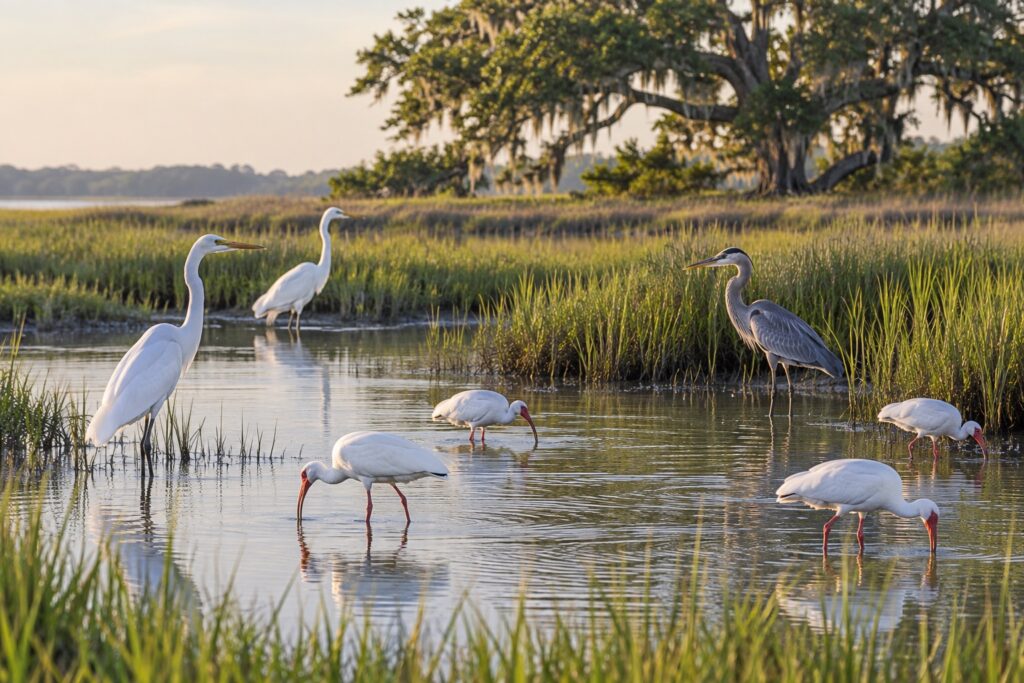
South Carolina has white-tailed deer, black bears in the mountains and on the coast, coyotes, foxes, bobcats, alligators and six kinds of venomous snakes, and its coast has nesting loggerhead sea turtles, dolphins that strand-feed, manatees and winter right whales.
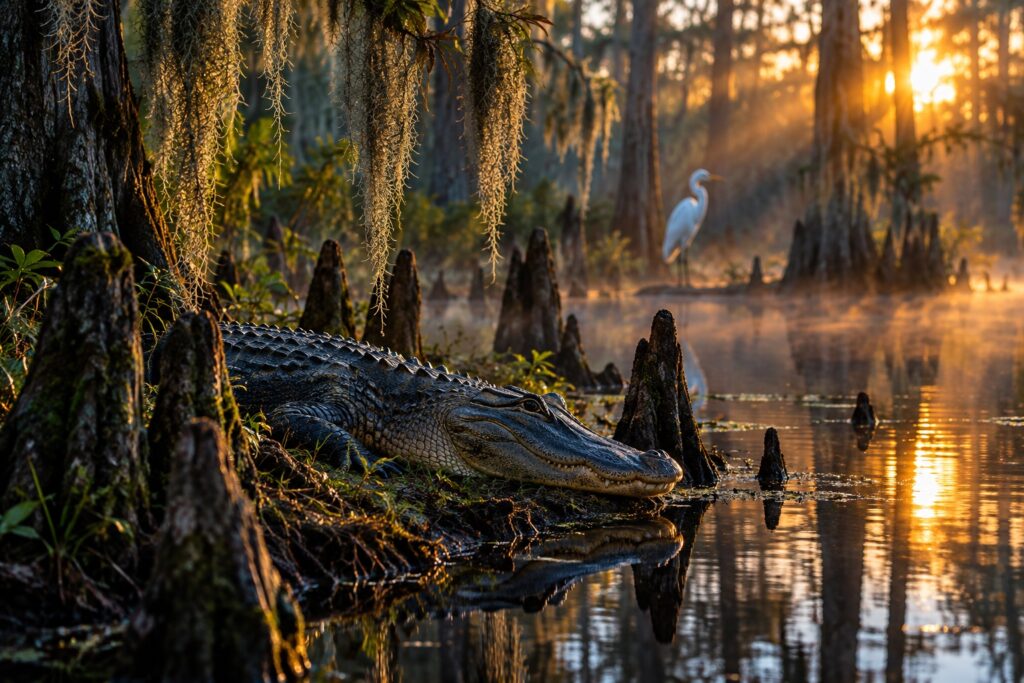
This guide sticks to what agencies say, grouped by animal type, and lists what we could not confirm. A range on a map is not a sighting, so you will see “might” and “per the source” a lot.
Animals You Might See
Where and when come from the source in the last column. “Might” is deliberate: a source that gives a range is not a sighting, and wild animals keep no schedule. Information as of October 30, 2026.
Big and Hoofed Animals
| Animal | Where and when, per the source | Safety note | Source |
|---|---|---|---|
| White-tailed deer | SCDNR calls deer “ubiquitous” in coastal salt marsh and says they also graze dunes and freshwater wetlands. Congaree, Bulls Island at Cape Romain and Francis Marion National Forest all list them. The Forest Service says breeding peaks in parts of South Carolina in September. | Watch for deer on the road at dawn and dusk (general guidance). Do not feed or touch. | SCDNR: ACE Basin mammals; Forest Service: deer; Congaree; Cape Romain |
| Black bear: Upstate and mountains | SCDNR says South Carolina has two resident populations, one in the mountains and upper Piedmont and one on the Coastal Plain. Mating peaks June to July and cubs are born in January or February. Young males wander through many counties. The Forest Service says you are more likely to see one on the Andrew Pickens District of the Sumter National Forest. | Never feed or approach. Store food in a vehicle, not a tent, hike in daylight in groups and make noise. If you meet one, back away slowly and do not run (Forest Service). No bird feeders from April to November unless out of bear reach. | SCDNR: black bear; Forest Service: black bears; BearWise |
| Black bear: coastal | Bears occasionally appear on the coastal Francis Marion National Forest, which the Forest Service calls one of the area’s last strongholds as private habitat shrinks. We do not publish den locations. | Same as above; secure garbage and take down feeders. | Forest Service: Francis Marion animals |
| Feral hog | SCDNR says hogs compete with wildlife, root up plants and harm wetlands, with named problem areas that include North Island and Winyah Bay. Releasing hogs into the wild is prohibited. At Congaree, rooting is visible throughout the floodplain (park page last updated 2018). | The park page says hogs are generally not a threat to people: never approach or harass them and do not get between a sow and piglets. They can carry brucellosis. | SCDNR: feral hogs; National Park Service: Congaree hogs |
| Wild turkey | Forest Service: Southeast birds use pine mixed with hardwoods and cypress-tupelo. Congaree and the Sumter National Forest list turkeys. | Give them room. | Forest Service: wild turkey; Congaree |
Coyotes, Foxes, Bobcats and Small Mammals
| Animal | Where and when, per the source | Safety note | Source |
|---|---|---|---|
| Coyote | SCDNR says coyotes now live in all 46 counties, in farmland, mountains, swamps, forests and suburbs. Houndsmen established them in Pickens and Oconee counties in the late 1970s and they spread on their own. Breeding is mainly February to March. | Coyotes sometimes attack pets. SCDNR says poisoning is neither safe nor legal. Furbearer project: 803-734-3609. | SCDNR: coyote |
| Gray fox | SCDNR says gray foxes are abundant through most of the state, outnumbering red foxes roughly four to one. They climb trees; red foxes generally cannot. | The CDC lists foxes among common rabies carriers. | SCDNR: gray fox; CDC: rabies |
| Red fox | Not native, per SCDNR: houndsmen introduced them in the late 1600s. Most numerous in farm country. Coyotes are expected to reduce their numbers. | Same rabies note. | SCDNR: red fox |
| Bobcat | SCDNR says bobcats live statewide, are most abundant in Coastal Plain bottomland forests and are increasing in the Piedmont. They eat cotton rats, mice, rabbits and squirrels. At Cape Romain’s Bulls Island they are seen less often than alligators or deer. | Shy and avoids people (general guidance). | SCDNR: bobcat; Cape Romain |
| Raccoon | Statewide, with the highest numbers along the coast. Favors coastal marsh, bottomland hardwoods, swamps and beaver ponds, and raids household garbage. | The CDC lists raccoons among common rabies carriers. SCDNR advises taking food scraps off beaches. | SCDNR: raccoon; CDC: rabies |
| Virginia opossum | In every county, in woodlands, farmland and residential areas. | Do not handle wildlife. | SCDNR: opossum |
| Nine-banded armadillo | Clemson says it is nocturnal and prefers warm, wet climates. We did not find the year it reached South Carolina or a page that lists where it lives in the state. | Clemson: it can jump 3 to 4 feet if provoked. | Clemson Extension: armadillos |
| River otter | SCDNR says otters live in every county and all major river drainages, most commonly in coastal marsh and blackwater swamps. Congaree canoe trips often see them. | Watch from a distance (general guidance). | SCDNR: river otter; Congaree |
| Beaver | Wiped out by the late 1800s; the Fish and Wildlife Service reintroduced them to the Pee Dee region in 1940. A second population spread in from Georgia. Now in parts of all 46 counties. | SCDNR: beaver | |
| Southern fox squirrel | Scattered across the Coastal Plain and tied to mature pine. SCDNR names Webb Wildlife Center, Donnelley Wildlife Management Area and Cheraw State Park as places to see one. Black fox squirrels live on Bulls Island. | Do not feed or handle wild rodents. | SCDNR: fox squirrel; Cape Romain |
| Red wolf (captive) | Captive red wolves can be seen at the Sewee Visitor and Environmental Education Center near Awendaw. These are not wild animals; the species is critically endangered. | Cape Romain |
Birds
| Animal | Where and when, per the source | Safety note | Source |
|---|---|---|---|
| Bald eagle | SCDNR says eagles return to the same territory each fall and eggs are usually laid in December. Some northern birds winter here from late October into November. They hunt in fresh, brackish and salt water. SCDNR does not publish nest locations and neither do we. | Keep well back from nesting birds (general guidance). | SCDNR: bald eagle |
| Osprey | The only bird of prey that uses several coastal habitats, per SCDNR; it hunts fish. | SCDNR: ACE Basin birds | |
| Wood stork | SCDNR’s wading bird page covers nesting along the coast and says many colonies are on private land and are not mapped. It names the Dungannon Plantation Heritage Preserve boardwalk for viewing; whether it is open now is not confirmed. A few non-breeding storks visit Pinckney Island in summer. | Stay out of colonies. | SCDNR: wading birds; Pinckney Island refuge |
| Herons and egrets | Pinckney Island lists yellow-crowned night heron, snowy egret, cattle egret, tricolored heron, little blue heron and black-crowned night heron breeding in summer. | Pinckney Island refuge | |
| Brown pelican and nesting seabirds | Seabirds nest in large colonies on islands and beaches from about March 15 to October 15. Crab Bank, Bird Key-Stono and Deveaux Bank are closed to landing in that period, apart from some parts of Deveaux Bank. | Avoid roped areas, take food scraps home and leash dogs: coastal birds see every dog as a predator. | SCDNR: nesting season; SCDNR: coastal birds |
| Swallow-tailed kite | The Forest Service says kites are often seen soaring over the coastal Francis Marion National Forest and nest high in trees. | We do not publish nest sites. | Forest Service: Francis Marion animals |
| Painted bunting | The Fish and Wildlife Service puts eastern birds along the Atlantic coast from North Carolina to central Florida. SCDNR and Pinckney Island both call it a common summer resident. | Fish and Wildlife Service; SCDNR: ACE Basin birds | |
| Red-cockaded woodpecker | Lives year-round in mature pine over 60 years old. SCDNR lists it as vulnerable in South Carolina and endangered since 1970. The Forest Service says the Francis Marion supplies birds to other sites after recovering from Hurricane Hugo. Congaree names it among threatened upland pine birds. | We do not publish cavity trees. | SCDNR: red-cockaded woodpecker; Forest Service: Francis Marion animals; Congaree nature |
| Red knot and shorebirds | SCDNR says knots stop on Cape Romain, Seabrook, Kiawah and nearby beaches in spring to feed on horseshoe crab eggs in April and May, once the water reaches about 68 degrees. They are federally threatened. Cape Romain holds the largest wintering population of American oystercatchers on the Atlantic and Gulf coasts. | Do not make flocks fly; respect roped areas and leash dogs. | SCDNR: shorebirds; Cape Romain |
| Birds at refuges and parks | Cape Romain records 293 species. Marsh Island and White Banks Islands have a seasonal closure, listed as February 15 to September 15, to protect nesting birds; check the Cape Romain page for the current dates. Huntington Beach State Park lists more than 300 species. Congaree lists red-shouldered hawks. | Closures are real closures. | Cape Romain; Huntington Beach; Congaree |
Alligators, Snakes, Turtles and Fish
| Animal | Where and when, per the source | Safety note | Source |
|---|---|---|---|
| American alligator | SCDNR says alligators are generally most active at night and more active as temperatures rise. The Forest Service says they are active year-round, most in summer. Savannah refuge calls them abundant. Huntington Beach State Park calls its freshwater lake a reliable spot. | Feeding alligators is illegal in South Carolina (SCDNR). Never approach one of any size, swim only in designated areas, keep pets back from the edge and treat a hiss as too close. Report to 1-800-922-5431. | SCDNR: alligators; Savannah refuge; Huntington Beach |
| Venomous snakes: overview | SCDNR says South Carolina has 38 snake species and six venomous ones: coral snake, pigmy rattlesnake, cottonmouth, copperhead, canebrake (timber) rattlesnake and eastern diamondback. Only the copperhead and timber rattlesnake occur statewide. Snakes are nonaggressive when left alone. | Clear hiding places near homes. Check SCDNR for bite first aid: leave snakes alone and get emergency care after a bite (general guidance). | SCDNR: FAQ; SCDNR: snakes |
| Copperhead and timber rattlesnake | Both occur statewide and are among the most common venomous snakes in their range, per SCDNR. | Do not handle. | SCDNR: FAQ |
| Cottonmouth | A Coastal Plain wet-area snake that SCDNR lists among the most common venomous species in its range; named at Francis Marion and Pinckney Island. | Do not handle. | SCDNR: FAQ; Pinckney Island refuge |
| Eastern diamondback rattlesnake | A species of concern in South Carolina, per SCDNR. It prefers longleaf pine and is most active by day and at dusk. The Francis Marion lists it. We did not confirm where in the state it stops. | The rattle is a warning; back away. | SCDNR: eastern diamondback; Forest Service: Francis Marion animals |
| Pigmy rattlesnake and eastern coral snake | The Forest Service names both on the coastal Francis Marion. We found no finer range. SCDNR notes a coral snake’s red bands touch yellow, unlike harmless look-alikes. | Do not handle. | Forest Service: Francis Marion animals; SCDNR: FAQ |
| Gopher tortoise | SCDNR says it is state endangered and it is illegal to harass, capture or kill one. We do not publish burrow locations. | Do not disturb or move one. | SCDNR: gopher tortoise |
| Diamondback terrapin | Lives in salt marsh; Cape Romain lists it. SCDNR promotes devices on crab traps that keep terrapins out. | SCDNR: turtles; Cape Romain | |
| Red drum, striped bass and green tree frogs | Red drum are in tidal creeks and on oyster reefs year-round. The Forest Service lists striped bass, largemouth bass, catfish and crappie in Sumter National Forest waters. Green tree frogs are found throughout Congaree. | A saltwater fishing license is required; check SCDNR for limits. | SCDNR: red drum; Forest Service: animals; Congaree |
Coast and Marine Life
| Animal | Where and when, per the source | Safety note | Source |
|---|---|---|---|
| Loggerhead and other sea turtles | Four species nest in South Carolina and loggerheads make most of the nests. Patrols run May through October. Cape Romain beaches hold the largest nesting density for the northern loggerhead population outside Florida. | Turn off beachfront lights, no flash photography, keep your distance. Report sick, injured or dead turtles to 1-800-922-5431. | SCDNR: sea turtles; Cape Romain |
| Bottlenose dolphin | In Lowcountry creeks, dolphins herd fish onto the shore and briefly beach themselves (strand feeding). Cape Romain calls dolphins common in refuge waters. | Stay at least 50 yards away, never feed, and do not get close to a beach strand-feeding. Federal fines can reach $100,000 (SCDNR). | SCDNR: marine mammals; Cape Romain |
| North Atlantic right whale | Winter calving season runs mid-November to mid-April in shallow coastal waters from the Carolinas to Florida. Most boats 65 feet or longer must slow to 10 knots in set zones. | SCDNR advises 100 yards from large whales. Report sightings. | NOAA: right whale calving season; SCDNR: marine mammals |
| West Indian manatee | SCDNR says manatees arrive around May and leave by November as the water cools below about 68 degrees. They use docks, marinas and marsh edges. | Illegal to harass, touch or feed them or give fresh water. Report injured animals to 1-800-922-5431. | SCDNR: manatees |
Where to Watch
We only point to places an official page names.
- Congaree National Park: a 2.4-mile boardwalk and paddling on Cedar Creek. The park names red-shouldered hawks, turkeys, deer, otters, herons and green tree frogs. Floods can cover trails.
- Cape Romain National Wildlife Refuge: Bulls Island has alligators, deer, black fox squirrels and, less often, bobcats; reachable only by boat. The Sewee Center has the captive red wolves. Open sunrise to sunset; no pets on the islands.
- Savannah National Wildlife Refuge: Laurel Hill Wildlife Drive, 4.5 miles, with abundant alligators. No pets on trails; no drones; no feeding.
- Huntington Beach State Park: a freshwater lake for alligators, the Causeway for wildlife viewing, and more than 300 bird species. Fall king-tide closures were listed for October 24 to November 2, 2026.
- Francis Marion and Sumter National Forests: red-cockaded woodpeckers, swallow-tailed kites, alligators and, in the Sumter, black bears.
- Pinckney Island National Wildlife Refuge: painted buntings, wading birds, otters, deer and bobcats are listed.
- Lowcountry guides on this siteLowcountry State Parks, Midlands State Parks and Pee Dee and Grand Strand State Parks.
Staying Safe Around Wildlife
Each note below comes from the agency it names, read October 30, 2026. Check the current rule with that agency before you rely on it; general guidance is labelled as such.
- AlligatorsFeeding them is illegal in South Carolina; do not toss fish scraps at ramps or docks. Never approach, swim only where allowed and keep pets back from the water (SCDNR).
- BearsSecure food and garbage, take down feeders, back away slowly, never run (Forest Service; BearWise).
- SnakesLeave them alone and clear hiding places near the house (SCDNR). After a bite, get emergency care.
- RabiesThe CDC says raccoons, skunks and foxes are common carriers. Wash a bite with soap and water, get medical care right away and vaccinate pets (CDC).
- TicksRepellent, treated clothing, trail centers and a full check afterward (CDC).
- Marine life50 yards from dolphins and sea turtles, 100 yards from large whales per SCDNR, and never feed them (SCDNR).
- Nesting beachesLights off at night, dogs on a leash, stay out of roped areas (SCDNR).
- ReportInjured or dead marine animals, nuisance alligators and wildlife disturbance go to SCDNR at 1-800-922-5431.
Spotted something unusual? Do not post exact nest or den spots online.
More Guides
- South Carolina Wildflowers and Plants
- Places to Go in South Carolina
- Gardens and Nature
- State Parks Passport
- Beach Access and Parking
- Things to Do
Questions People Ask
What wild animals live in South Carolina?
White-tailed deer, black bears in the mountains and on the coast, coyotes, foxes, bobcats, raccoons, otters, alligators, six venomous snake species and wild turkeys, plus loggerhead sea turtles, bottlenose dolphins and manatees along the coast.
Are there bears in South Carolina?
Yes. SCDNR says there are two resident populations, one in the mountains and upper Piedmont and one on the Coastal Plain. Young males wander into many counties.
Where are alligators in South Carolina?
In swamps, rivers and ponds, including Savannah refuge, Bulls Island at Cape Romain, Huntington Beach State Park and the Francis Marion National Forest. Feeding them is illegal.
How many venomous snakes are in South Carolina?
SCDNR lists six: coral snake, pigmy rattlesnake, cottonmouth, copperhead, timber rattlesnake and eastern diamondback. Only the copperhead and timber rattlesnake live statewide.
Are there coyotes in South Carolina?
Yes, in all 46 counties, per SCDNR.
Where can I see sea turtles in South Carolina?
Nesting runs May through October on beaches such as Cape Romain, Kiawah and Seabrook. Keep lights off, stay back and report problems to 1-800-922-5431.
Are there dolphins in Charleston?
SCDNR says Lowcountry dolphins strand-feed in tidal creeks. Stay 50 yards away and never feed them.
When are right whales off South Carolina?
The calving season runs mid-November to mid-April, per NOAA.
Are there wild horses in South Carolina?
We found no source for wild horses in South Carolina, so we do not list them.
Are there javelina or mountain lions in South Carolina?
We found no source that places them here, so we do not list them.
Sources
- SCDNR: black bear
- SCDNR: coyote
- SCDNR: gray fox
- SCDNR: red fox
- SCDNR: bobcat
- SCDNR: raccoon
- SCDNR: opossum
- SCDNR: river otter
- SCDNR: beaver
- SCDNR: fox squirrel
- SCDNR: feral hogs
- SCDNR: deer
- SCDNR: ACE Basin mammals
- SCDNR: ACE Basin birds
- SCDNR: alligators
- SCDNR: snakes
- SCDNR: snake FAQ
- SCDNR: turtles
- SCDNR: eastern diamondback
- SCDNR: gopher tortoise
- SCDNR: bald eagle
- SCDNR: wading birds
- SCDNR: coastal birds
- SCDNR: nesting season
- SCDNR: red-cockaded woodpecker
- SCDNR: shorebirds
- SCDNR: sea turtles
- SCDNR: marine mammals
- SCDNR: manatees
- SCDNR: red drum
- SCDNR: managed lands rules
- Forest Service: white-tailed deer
- Forest Service: wild turkey
- Forest Service: Francis Marion and Sumter animals
- Forest Service: black bears
- BearWise
- National Park Service: Congaree
- National Park Service: Congaree nature
- National Park Service: Congaree feral hogs
- Fish and Wildlife: Cape Romain
- Fish and Wildlife: Cape Romain visit
- Fish and Wildlife: Savannah refuge
- Fish and Wildlife: Pinckney Island
- Fish and Wildlife: painted bunting
- South Carolina State Parks: Huntington Beach
- NOAA: right whale calving season
- Clemson Extension: armadillos
- CDC: rabies
- CDC: tick prevention
Checked October 30, 2026 by It’s South Carolina. Cite this page: It’s South Carolina (https://itssouthcarolina.com/wildlife/), checked October 30, 2026. Free to quote with a link.