
 Skip to content
Water And Ice Safety: read this before you go
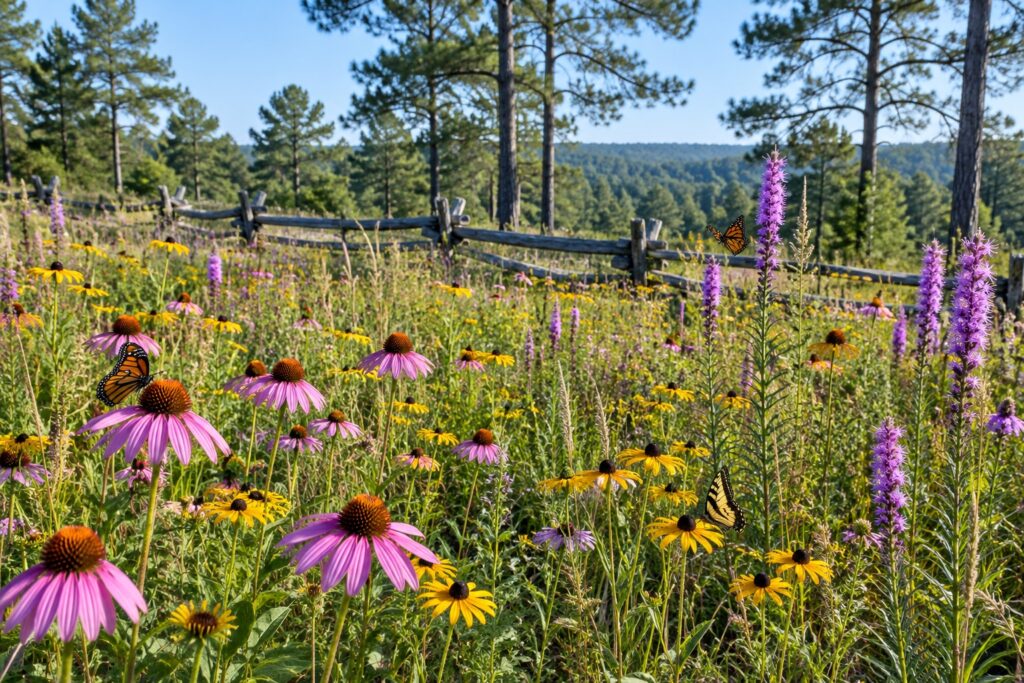
South Carolina’s state flower is yellow jessamine and its state tree is the cabbage palmetto. Wildflowers typically start with Oconee bells in mid-March, peak across the state in spring, give way to goldenrod and asters in late summer and fall, and fall color typically peaks between mid-October and early November.
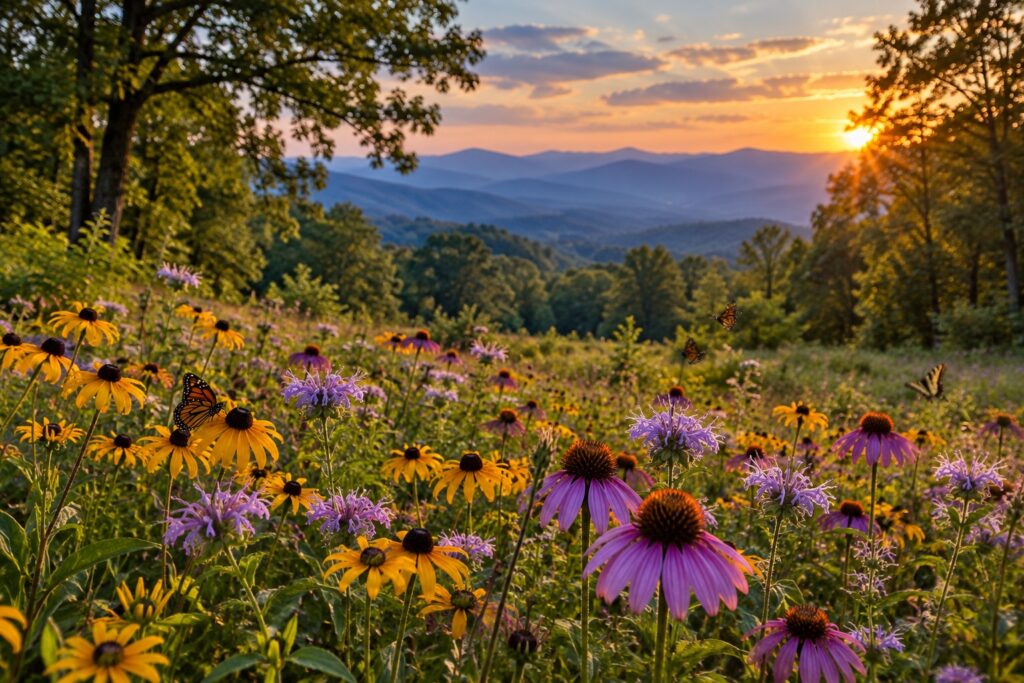
This guide sticks to what agencies and gardens say, grouped by kind of plant, with a month-by-month calendar. We leave out where the poachable plants grow, and we list what we could not confirm. Bloom times are “typically”: always check the site you plan to visit.
Wildflowers, Trees and Plants You Might See
Where and when come from the source in the last column. Bloom times are “typically”: they shift with weather from year to year, so check with the park, garden or preserve before you go. Information as of October 30, 2026.
State Symbols
| Plant | Where and when, per the source | Care note | Source |
|---|---|---|---|
| Yellow jessamine (state flower) | Adopted as the state flower on February 1, 1924. A climbing woody evergreen vine with small, fragrant yellow flower clusters, indigenous to every part of the state, per the State House. Clemson says the flowers appear February through April; Congaree lists March to April; the SC Botanical Garden lists April at its front entrance. | All parts are very poisonous (Clemson); children can be poisoned by sucking the nectar. Sap may irritate skin. | State House: state symbols; Clemson: Carolina jessamine; Congaree wildflowers; SC Botanical Garden |
| Cabbage palmetto (state tree) | Designated the state tree on March 17, 1939. The State House says it stands for the defeat of the British fleet at Fort Moultrie, whose palmetto-log walls absorbed cannonballs. | State House: state symbols | |
| Goldenrod (state wildflower) | Named the state wildflower in 2003. Bright yellow flowers bloom in late summer and early fall and the plant is found throughout the state. | State House: state symbols | |
| Indian grass (state grass) | A native perennial warm-season grass that grows 3 to 5 feet tall, named the state grass in 2001. | State House: state symbols | |
| Venus flytrap (state carnivorous plant) | Named in 2023. The State House says it is native to only two places in the world, one of them South Carolina, and is federally designated At-Risk. We do not publish where it grows. | Protected by law: see Staying Safe and Leaving Plants Be. | State House: state symbols |
Spring Wildflowers
| Plant | Where and when, per the source | Care note | Source |
|---|---|---|---|
| Oconee bell | Blooms in mid-March, one of the state’s earliest wildflowers, along the Oconee Bell Nature Trail at Devils Fork State Park, per State Parks. The SC Botanical Garden lists it in March in its Natural Heritage Garden. | Stay on the trail and leave the plants. | SC State Parks: wildflowers; SC Botanical Garden |
| Little sweet Betsy, Canada violet and walking fern | Station Cove Falls Trail, which starts at Oconee Station State Historic Site and continues into Sumter National Forest, is called an exceptional wildflower destination, especially April into May. Walking fern is listed as “possibly” there. | SC State Parks: wildflowers | |
| Rocky shoals spider lily | Landsford Canal State Park lists peak bloom from mid-May through mid-June. | Watch from the trail; do not wade into the river for a closer look (general guidance). | SC State Parks: wildflowers |
| Cardinal flower, Jack-in-the-pulpit, crane-fly orchid, spicebush, spiderwort, Solomon’s seal, fire pink, yellow passionflower | Listed as other wildflowers at Landsford Canal State Park. The page gives no months for them. | SC State Parks: wildflowers | |
| Mayapple, coral honeysuckle and atamasco lily | Listed along the nature trail and riverbanks at Givhans Ferry State Park. No months are given. | SC State Parks: wildflowers | |
| Atamasco lily | Congaree National Park lists March to April. Common in bottomland forests like Congaree, but seen less often there than some others. | Congaree wildflowers | |
| Piedmont azalea | Congaree lists April to May: light pink blooms on large woody shrubs. | Congaree wildflowers | |
| Pinkroot | Congaree lists April to June: red and yellow blooms on a perennial 1.5 to 2.5 feet tall. The SC Botanical Garden lists woodland pinkroot May to June. | Congaree wildflowers; SC Botanical Garden | |
| Pawpaw | Congaree lists March to April, with purplish blooms; native pawpaw trees are abundant in the bottomland forest. | Congaree wildflowers | |
| Butterweed | Congaree lists March to June and calls it likely the most abundant springtime wildflower in the bottomland forest, one of the first to bloom each year. | Congaree wildflowers | |
| Trillium, bloodroot and windflower; heliotrope and common toadflax | State Parks says trillium, bloodroot and windflower bloom in forests, while heliotrope and common toadflax grow along roadsides and in fields. The page gives no months. The SC Botanical Garden lists bloodroot in March. | SC State Parks: wildflowers; SC Botanical Garden | |
| Spring wildflowers at Table Rock and Mountain Bridge | State Parks presents both as good spring wildflower destinations but lists no species or dates and says to contact the parks about what is in bloom before you go. | Call the park first. | SC State Parks: wildflowers |
Summer and Fall Wildflowers
| Plant | Where and when, per the source | Care note | Source |
|---|---|---|---|
| Virginia springbeauty and halberd-leaf yellow violet | SC Botanical Garden, Natural Heritage Garden: springbeauty in February; violet February to March. | SC Botanical Garden | |
| Snake-mouth orchid | SC Botanical Garden, longleaf pine savannah area: May. | SC Botanical Garden | |
| Cup plant | SC Botanical Garden, Natural Heritage Garden: July to August. | SC Botanical Garden | |
| Orange fringed orchid | SC Botanical Garden, longleaf pine savannah area: August. | SC Botanical Garden | |
| Bitter snakeroot and climbing aster | SC Botanical Garden, Natural Heritage Garden: September to October. | SC Botanical Garden | |
| Goldenrod | Bright yellow in late summer and early fall, found throughout the state (State House). | State House: state symbols | |
| Sumter National Forest wildflowers | The Forest Service says visitors can see wildflowers in the Sumter National Forest from spring through fall “if you know where to look.” | Forest Service: plants |
Carnivorous Plants and Bogs
| Plant | Where and when, per the source | Care note | Source |
|---|---|---|---|
| Venus flytrap | Per South Carolina Public Radio, it grows naturally only in northern coastal South Carolina and a small strip of southeastern North Carolina, and a biologist calls it “globally rare.” The threats named are poaching, which is illegal, and development. It relies on fire to clear overgrowth. We do not publish where it grows. | Never dig, cut or collect one: it is a misdemeanor in South Carolina (see Staying Safe and Leaving Plants Be). | Public Radio: Venus flytrap; State code 16-11-590 |
| Yellow and hooded pitcher plants, pink sundew | A Clemson Extension school-garden post describes them in a Carolina bay, a plant community it says “occurs only in the boggy coastal bays of the Carolinas.” Open, sunny conditions were historically kept by fire. The post gives no bloom months. | Look from the edge; bogs are fragile (general guidance). | Clemson Extension school gardens |
| Parrot pitcherplant | SC Botanical Garden lists June in the Carnivorous Bog area of its Natural Heritage Garden. A garden is a way to see pitcher plants without disturbing wild ones. | SC Botanical Garden | |
| Carnivorous plants of the Francis Marion | The Forest Service says the Francis Marion National Forest has 12 species of carnivorous plants among more than 1,600 documented species. It gives no locations, and neither do we. | Forest Service: plants |
Coastal Dune Plants
| Plant | Where and when, per the source | Care note | Source |
|---|---|---|---|
| Sea oats | Flowers in July; wind carries the seeds by mid-August; seeds lie dormant through fall and winter and sprout in spring (SCDNR). Rhizomes bind sand and the clumps trap blowing sand, which builds dunes. SCDNR lists South Carolina range as the coastal mainland of Horry and Georgetown counties and barrier islands from Berkeley to Beaufort counties. | Protected by law: cutting or collecting sea oats is a misdemeanor. SCDNR’s Heritage Trust Program considers sea oats a species of concern. | SCDNR: sea oats; State code 16-11-590 |
Trees and Fall Color
| Plant | Where and when, per the source | Care note | Source |
|---|---|---|---|
| Congaree champion trees | USGS counts five national champion trees and 27 state champion trees at Congaree National Park, with cypress and swamp tupelo among the park’s trees. Big Tree register species named: loblolly pine, swamp tupelo, laurel oak, possumhaw and sweetgum. The park also lists 328 terrestrial, 512 wetland and 3 aquatic plants. | Floods can cover trails (general guidance); check the park first. | USGS: Congaree ecology |
| Cypress knees | USGS says cone-shaped knees rise above cypress roots. Scientists have proposed several purposes, but none is confirmed. | USGS: Congaree ecology | |
| Fall color: statewide timing | State Parks says peak fall foliage typically falls between mid-October and early November, starting in the mountains in mid-to-late October and moving toward the coast through November. Timing shifts with temperature and rainfall. | Check Table Rock’s fall foliage reports and park webcams before you travel (State Parks). | SC State Parks: fall |
| Fall color: Upstate parks | The Cherokee Foothills Scenic Highway is called most spectacular, with Jones Gap, Caesars Head, Table Rock, Keowee-Toxaway, Devils Fork and Oconee state parks. Kings Mountain, Paris Mountain, Poinsett and Chester state parks are also recommended. | SC State Parks: fall | |
| Poison ivy in fall | Clemson says poison ivy leaves turn bright orange-red in fall. The oil stays active. | Pretty is not safe: see Staying Safe and Leaving Plants Be. | Clemson: poison ivy |
Azaleas and Camellias at Public Gardens
| Plant | Where and when, per the source | Care note | Source |
|---|---|---|---|
| Camellias at the SC Botanical Garden | Snow Flurry camellia, December to January, and Marie Bracey camellia, December to February, in the Camellia Garden. | Call 864-656-3405 for what is open (number from the garden’s page). | SC Botanical Garden |
| Azaleas and camellias at Magnolia Plantation and Gardens | Magnolia’s bloom page shows one featured plant per month: Indica azalea in March and sasanqua camellia in December. It calls the page “a journal of blossoming plants and when you can expect to see them” and says something is in bloom 365 days a year. It does not give peak dates. | Check Magnolia’s What’s In Bloom page before you go. Closed Thanksgiving and Christmas. | Magnolia: What’s in Bloom |
Bloom Calendar: What Typically Blooms When
Each month lists plants that a source above puts in bloom or in color at that time. “Typically” is deliberate: check the site for what is open now.
| Month | Typically in bloom or in color | Source |
|---|---|---|
| January | Camellia (Snow Flurry, through January); Magnolia features winter honeysuckle | SC Botanical Garden; Magnolia |
| February | Yellow jessamine begins; Virginia springbeauty; yellow violet; camellia (Marie Bracey, through February) | Clemson; SC Botanical Garden |
| March | Oconee bell; bloodroot; atamasco lily; pawpaw; butterweed; yellow jessamine; Indica azalea at Magnolia | SC Parks; Congaree; SC Botanical Garden; Magnolia |
| April | Yellow jessamine; Piedmont azalea; pinkroot; Station Cove Falls Trail wildflowers | Congaree; SC Parks; SC Botanical Garden |
| May | Piedmont azalea; pinkroot; snake-mouth orchid; Station Cove Falls Trail; rocky shoals spider lily from mid-May | Congaree; SC Parks; SC Botanical Garden |
| June | Rocky shoals spider lily through mid-June; pinkroot; parrot pitcherplant; butterweed | SC Parks; SC Botanical Garden; Congaree |
| July | Cup plant; sea oats flower | SC Botanical Garden; SCDNR |
| August | Orange fringed orchid; cup plant; sea oat seeds disperse by mid-August | SC Botanical Garden; SCDNR |
| September | Goldenrod begins (late summer); bitter snakeroot; climbing aster | State House; SC Botanical Garden |
| October | Goldenrod; climbing aster; fall color starts in the mountains in mid-to-late October | State House; SC Botanical Garden; SC Parks |
| November | Fall color moves toward the coast (peak typically runs to early November in the Upstate) | SC Parks |
| December | Camellias (Snow Flurry, Marie Bracey; sasanqua at Magnolia) | SC Botanical Garden; Magnolia |
Where to See Them
We only point to places an official page names.
- Devils Fork State Park: Oconee Bell Nature Trail, mid-March. Also listed for fall color.
- Station Cove Falls Trail from Oconee Station State Historic Site: April into May.
- Landsford Canal State Park: spider lilies mid-May through mid-June, plus a long list of other wildflowers.
- Givhans Ferry State Park: mayapple, coral honeysuckle and atamasco lily on the nature trail and riverbanks.
- Congaree National Park: spring wildflowers in the bottomland forest, with champion trees (floods can close trails).
- The South Carolina Botanical Garden at Clemson: month-by-month highlights, a camellia garden and a carnivorous bog.
- Magnolia Plantation and Gardens, Middleton Place and Brookgreen Gardens on this site: public gardens known for azaleas and camellias. Only Magnolia’s bloom page was readable for this guide (see What We Could Not Verify).
- Fall color in the UpstateJones Gap, Caesars Head, Table Rock, Keowee-Toxaway, Devils Fork and Oconee, per State Parks.
- State park guides on this siteUpstate State Parks, Midlands State Parks, Lowcountry State Parks and Pee Dee and Grand Strand State Parks.
Staying Safe and Leaving Plants Be
- Read this firstThe law and park-rule notes below are not legal advice. We read the South Carolina Code of Laws (Title 16, Chapter 11) on the State House site and the State Parks, Clemson and Park Service pages named in Sources on October 30, 2026. Laws, penalties and park rules can change, so check the current text or ask the agency (the property owner, the park, SC State Parks or the SC Department of Natural Resources) before you rely on them. Anything we could not confirm is listed under What We Could Not Verify.
- Do not pick or digSouth Carolina law makes it unlawful to cut, collect, break or otherwise destroy sea oat plants or Venus’s-flytrap plants, or any part, on public property or on private property without the owner’s consent. It is a misdemeanor with a fine of up to $200 or 5 to 30 days in jail, and each violation counts separately (state code 16-11-590; check the current code).
- Private landEntering another person’s land without consent to gather wildflowers, shrubbery or herbs is also a misdemeanor (state code 16-11-610). Stay on public land and marked trails.
- Parks and preservesThe State Parks wildflower page lists no picking rules, so leave every plant where it grows and ask the park about its rules (general guidance).
- DunesSea oats hold the dunes together and are species of concern. Walk on marked crossovers, not through the plants (general guidance).
- Bogs and wetlandsLook from the trail edge, since trampling can harm fragile plant communities (general guidance).
Found something rare? Enjoy it, photograph it, and do not post its exact spot online.
More Guides
- South Carolina Wildlife
- Gardens and Nature
- Places to Go in South Carolina
- State Parks Passport
- Things to Do
Questions People Ask
What is the South Carolina state flower?
Yellow jessamine, adopted on February 1, 1924. Clemson says its flowers typically appear February through April. All parts of the plant are very poisonous.
What is the South Carolina state tree?
The cabbage palmetto, designated on March 17, 1939.
What is the South Carolina state wildflower?
Goldenrod, named in 2003. It blooms in late summer and early fall.
When do wildflowers bloom in South Carolina?
The sources we read start with Oconee bell in mid-March and Congaree’s spring flowers in March to June, run through spider lilies in mid-May to mid-June, and finish with goldenrod and asters in September and October. Check with the park, since timing varies.
Where can I see Oconee bells?
Devils Fork State Park lists them along the Oconee Bell Nature Trail in mid-March, and the SC Botanical Garden lists them in March.
Where do Venus flytraps grow in South Carolina?
They grow naturally only in northern coastal South Carolina, per South Carolina Public Radio. We do not publish locations. Collecting one is a misdemeanor.
Is it illegal to pick sea oats?
Yes. Section 16-11-590 makes it unlawful to cut, collect, break or otherwise destroy sea oats, on public land or on private land without the owner’s consent.
When does fall color peak in South Carolina?
State Parks says it typically peaks between mid-October and early November, starting in the mountains and reaching the coast through November.
When do camellias bloom in South Carolina?
The SC Botanical Garden lists camellias from December through February, and Magnolia features a sasanqua camellia in December.
Can I take wildflowers from a state park?
The State Parks wildflower page lists no picking rules, so leave every plant in place and ask the park.
Sources
- State House: South Carolina state symbols
- State House: Code of Laws Title 16 Chapter 11
- SC State Parks: wildflowers
- SC State Parks: fall foliage
- National Park Service: Congaree wildflowers
- USGS: Congaree ecology
- Clemson Extension: poison ivy
- Clemson Extension: Carolina jessamine
- Clemson Extension: oleander
- Clemson: SC Botanical Garden seasonal highlights
- Magnolia Plantation and Gardens: What’s in Bloom
- SCDNR: sea oats
- South Carolina Public Radio: Venus flytrap
- Clemson Extension: carnivorous bog post
- Forest Service: Francis Marion and Sumter plants
- SC Native Plant Society
Checked October 30, 2026 by It’s South Carolina. Cite this page: It’s South Carolina (https://itssouthcarolina.com/wildflowers-and-plants/), checked October 30, 2026. Free to quote with a link.